
Popular US Medicines in Japan: What Are the Japanese Alternatives?
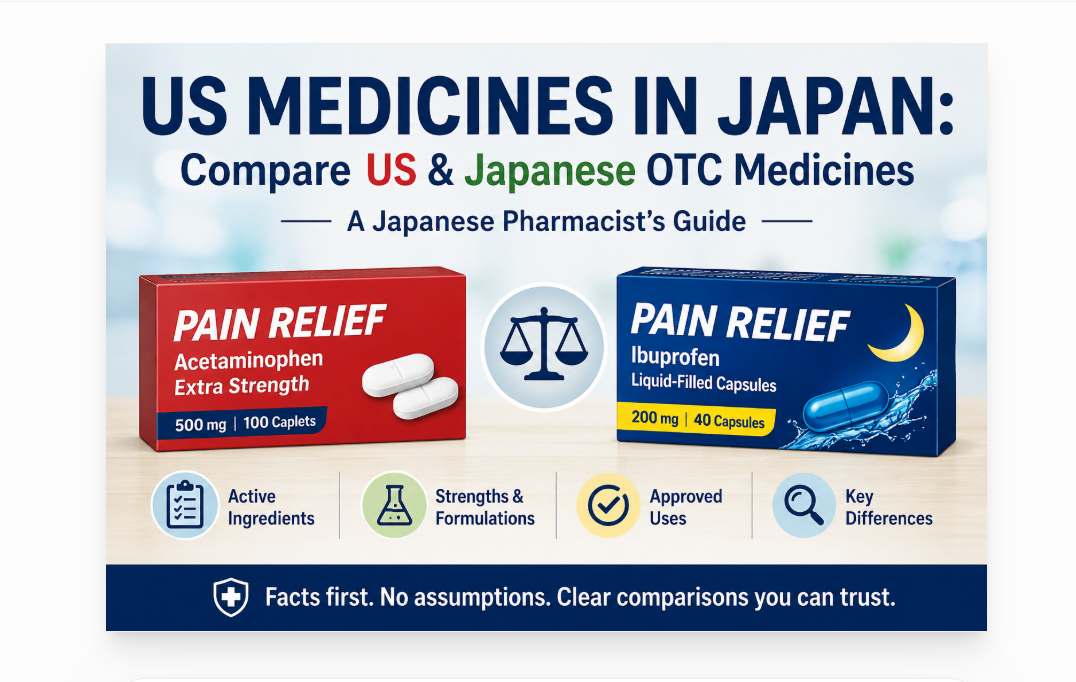
- US Medicines in Japan: Compare Tylenol, Advil & Japanese OTCs
- TYLENOL Extra Strength vs. TYLENOL A in Japan
- Advil vs. Ringl IB α200 in Japan
- Benadryl vs. Restamin Kowa Sugar-Coated Tablets in Japan
- Claritin vs. Claritin EX in Japan
- ZYRTEC vs. Japanese Cetirizine OTC Medicines
- PEPCID AC vs. GASTER10 in Japan
- IMODIUM A-D vs. Japanese Loperamide OTC Medicines
- Dramamine vs. Motion Sickness Medicines in Japan
- TUMS Extra Strength 750 vs. Ohta’s Isan Chewable NEO in Japan
- More US Medicines Coming Soon
US Medicines in Japan: Compare Tylenol, Advil & Japanese OTCs
If you use over-the-counter medicines such as TYLENOL, Advil, Aleve, Benadryl, or Claritin at home, you may wonder what to look for when you need medicine in Japan.
The brand names, ingredients, strengths, and directions can be different from those in your home country.
I’m a pharmacist working in Japan.
In this guide, I compare popular US OTC medicines with OTC products sold in Japan using factual information such as:
- Active ingredients
- Amount of each active ingredient
- Purpose of each ingredient
- Differences in approved uses and directions
This guide does not assume that two medicines are equivalent just because they contain the same ingredient or are sold for a similar purpose.
Use the comparisons below as a starting point when looking for medicine in Japan.
TYLENOL Extra Strength vs. TYLENOL A in Japan
If you usually take TYLENOL Extra Strength in the US, you may notice the familiar TYLENOL brand in Japan.
However, the US and Japanese products are not identical.
🇺🇸 TYLENOL Extra Strength
TYLENOL Extra Strength sold in the US contains 500 mg of acetaminophen per caplet.
🇯🇵 TYLENOL A

TYLENOL A sold in Japan contains 300 mg of acetaminophen per tablet.
What’s in them?
| 🇺🇸 TYLENOL Extra Strength | 🇯🇵 TYLENOL A | |
|---|---|---|
| Active ingredient | Acetaminophen | Acetaminophen |
| Amount | 500 mg/caplet | 300 mg/tablet |
| Other active ingredients | None | None |
| Main purpose | Pain relief / fever reduction | Pain relief / fever reduction |
Both products contain acetaminophen as their only active ingredient, but the amount in each caplet or tablet is different.
What is acetaminophen?
Acetaminophen is an analgesic and antipyretic ingredient used to relieve pain and reduce fever.
In the US, TYLENOL Extra Strength is labeled for the temporary relief of minor aches and pains, including headache, backache, toothache, muscular aches, minor arthritis pain, pain associated with the common cold, and menstrual cramps, as well as temporary reduction of fever.
In Japan, TYLENOL A is approved for pain including headache, menstrual pain, toothache, sore throat, joint pain, neuralgia, lower back pain and muscular pain, among others, and for reducing fever associated with chills and fever.
Before you buy medicine in Japan
Even when two medicines contain the same active ingredient, their strength, dosage instructions, age restrictions, warnings, and approved uses may differ between countries.
For example:
US TYLENOL Extra Strength
Acetaminophen 500 mg per caplet
Japanese TYLENOL A
Acetaminophen 300 mg per tablet
Do not assume that the number of tablets or dosing instructions are interchangeable.
Use this comparison as a reference and, when buying OTC medicine in Japan, show the information to a pharmacist or other qualified pharmacy staff and ask which medicine is appropriate for you.
Official sources
The information in this comparison is based on official product information from the US and Japan.
Please check the official product information as well as the latest package information on the Amazon product pages linked above before purchasing or using any medicine.
- US: TYLENOL Extra Strength — Official Drug Facts / DailyMed
- Japan: TYLENOL A — Official Japanese product information
For advice on choosing an OTC medicine in Japan, show this comparison to a pharmacist or other qualified pharmacy staff and ask which medicine is appropriate for you.
Advil vs. Ringl IB α200 in Japan
If you usually take Advil in the US, one Japanese OTC product you can compare it with is Ringl IB α200 (リングルアイビーα200).
Both products contain ibuprofen as their only active ingredient, and both contain 200 mg per tablet or capsule. However, they are not identical products, and their labeled directions and approved uses differ between the US and Japan.
🇺🇸 Advil
Advil Tablets contain 200 mg of ibuprofen per tablet. In the US Drug Facts, ibuprofen is listed as an NSAID used as a pain reliever and fever reducer.
🇯🇵 Ringl IB α200

Ringl IB α200 contains 200 mg of ibuprofen per capsule. It is sold in Japan as an OTC analgesic and antipyretic.
What’s in them?
| 🇺🇸 Advil | 🇯🇵 Ringl IB α200 | |
|---|---|---|
| Active ingredient | Ibuprofen | Ibuprofen |
| Amount | 200 mg/tablet | 200 mg/capsule |
| Other active ingredients | None | None |
| Dosage form | Tablet | Liquid-filled capsule |
| Main purpose | Pain relief / fever reduction | Pain relief / fever reduction |
Both products therefore contain ibuprofen 200 mg as the only active ingredient. The Japanese product uses a liquid-filled capsule formulation, while standard Advil Tablets are coated tablets.
What is ibuprofen?
Ibuprofen is a nonsteroidal anti-inflammatory drug (NSAID) used to relieve pain and reduce fever.
US Advil is labeled for temporary relief of minor aches and pains including headache, toothache, backache, menstrual cramps, muscular aches, pain associated with the common cold, and minor arthritis pain, as well as temporary reduction of fever.
In Japan, Ringl IB α200 is approved for relief of headache, toothache, sore throat, joint pain, neuralgia, lower back pain, muscular pain, menstrual pain and several other types of pain, as well as reduction of fever associated with chills and fever.
Before you buy medicine in Japan
Even when two products contain the same active ingredient at the same strength, their dosage instructions, age restrictions, warnings, approved uses, and formulations may differ between countries. For example, current US Advil labeling permits use from age 12 under its labeled directions, while Ringl IB α200 is labeled in Japan for adults aged 15 and over.
Use this comparison as a reference and, when buying OTC medicine in Japan, show the information to a pharmacist or other qualified pharmacy staff and ask which medicine is appropriate for you.
Official sources
- US: Advil Tablets — Official Drug Facts
- Japan: Ringl IB α200 — Official product information, Sato Pharmaceutical
Please also check the latest package information on the Amazon product pages linked above before purchasing or using any medicine.
Benadryl vs. Restamin Kowa Sugar-Coated Tablets in Japan
If you usually take BENADRYL Allergy ULTRATABS in the US, one Japanese OTC medicine you can compare it with is Restamin Kowa Sugar-Coated Tablets (レスタミンコーワ糖衣錠).
Both products contain diphenhydramine hydrochloride as their only active ingredient.
However, their labeled dosage and approved uses are different in the US and Japan.
🇺🇸 BENADRYL Allergy ULTRATABS
🇯🇵 Restamin Kowa Sugar-Coated Tablets

What’s in them? — Maximum labeled adult daily dose
| 🇺🇸 BENADRYL Allergy ULTRATABS | 🇯🇵 Restamin Kowa Sugar-Coated Tablets | |
|---|---|---|
| Active ingredient | Diphenhydramine HCl | Diphenhydramine HCl |
| Amount per tablet | 25 mg | 10 mg |
| Maximum labeled adult daily amount | 300 mg/day | 90 mg/day |
| Other active ingredients | None | None |
| Drug class | Antihistamine | Antihistamine |
Important: The amounts above show the maximum daily amount permitted by each product’s labeled adult directions. They are not recommended doses for every person.
What is diphenhydramine?
Diphenhydramine is a first-generation antihistamine that blocks the action of histamine.
In the US, BENADRYL Allergy ULTRATABS is labeled for temporary relief of symptoms caused by hay fever and other upper respiratory allergies, including runny nose, sneezing, itchy or watery eyes, and itching of the nose or throat. It is also labeled for runny nose and sneezing associated with the common cold.
In Japan, Restamin Kowa Sugar-Coated Tablets are approved for hives, eczema, rash/contact dermatitis, itching, and rhinitis.
So, although both products contain the same active ingredient, their approved uses and labeled dosage are not the same.
Before you buy medicine in Japan
BENADRYL Allergy ULTRATABS and Restamin Kowa Sugar-Coated Tablets both contain diphenhydramine hydrochloride, but do not use the US dosing instructions for the Japanese product.
Diphenhydramine can cause significant drowsiness. Always follow the directions and warnings on the product you actually purchase.
Use this comparison as a reference and, when buying OTC medicine in Japan, show the information to a pharmacist or other qualified pharmacy staff and ask which medicine is appropriate for you.
Official sources
- US: BENADRYL Allergy ULTRATABS — Official Product Information / Drug Facts
- Japan: Restamin Kowa Sugar-Coated Tablets — Official Product Information, Kowa
Please also check the latest package information on the Amazon product pages linked above before purchasing or using any medicine.
Claritin vs. Claritin EX in Japan
If you usually take Claritin 24 Hour Tablets in the US, you may find a product with the same familiar brand name in Japan: Claritin EX (クラリチンEX).
Both products contain loratadine 10 mg per tablet and are taken once daily according to their respective labels.
However, there is an important difference for families traveling with children: the labeled age for OTC use is different in the US and Japan.
🇺🇸 Claritin 24 Hour Tablets
🇯🇵 Claritin EX

What’s in them?
| 🇺🇸 Claritin 24 Hour Tablets | 🇯🇵 Claritin EX | |
|---|---|---|
| Active ingredient | Loratadine | Loratadine |
| Amount per tablet | 10 mg | 10 mg |
| Labeled frequency | Once daily | Once daily |
| OTC tablet directions by age | 6 years and over | 15 years and over |
| Under the labeled age | Under 6: Ask a doctor | Under 15: Do not take |
Both products contain the same amount of loratadine: 10 mg per tablet.
The important difference: age restrictions
This is where the US and Japanese labels differ significantly.
For US Claritin 24 Hour Tablets, the Drug Facts state:
- Adults and children 6 years and over: 1 tablet daily
- Children under 6 years: ask a doctor
In contrast, Japanese Claritin EX is labeled only for adults aged 15 years and over:
- 15 years and over: 1 tablet once daily after a meal
- Under 15 years: do not take
So, even though both tablets contain loratadine 10 mg, you should not assume that the US age directions can be applied to the Japanese OTC product.
What is loratadine?
Loratadine is a second-generation antihistamine used to relieve allergy symptoms.
Both US Claritin and Japanese Claritin EX contain loratadine as their active ingredient.
However, having the same active ingredient and strength does not mean that the labeling and directions are interchangeable between countries.
Before you buy Claritin in Japan
This difference is especially important if you are traveling in Japan with children.
A child who can use Claritin 24 Hour Tablets according to the US label may still be below the approved OTC age for Claritin EX sold in Japan.
Do not use the US age or dosing instructions for the Japanese product.
Use this comparison as a reference and, especially when buying medicine for a child, show the information to a pharmacist or other qualified pharmacy staff in Japan and ask which medicine is appropriate before purchasing.
[Read the full comparison: Claritin vs. Claritin EX in Japan →]
Official sources
- US: Claritin 24 Hour Tablets — Official Product Information / Drug Facts
- Japan: Claritin EX — Official Product Information, Taisho Pharmaceutical
Please also check the latest package information on the Amazon product pages linked above before purchasing or using any medicine.
ZYRTEC vs. Japanese Cetirizine OTC Medicines
If you usually take ZYRTEC Allergy Relief Tablets in the US, there are OTC allergy medicines containing the same active ingredient in Japan.
Two examples are:
Stonarhini Z Gel (ストナリニZジェル)
New CONTAC Rhinitis Z (新コンタック鼻炎Z)
All three products contain cetirizine hydrochloride 10 mg as the labeled daily amount.
However, there is an important difference: the labeled age for OTC use is different in the US and Japan.
🇺🇸 ZYRTEC Allergy Relief Tablets
ZYRTEC Allergy Relief Tablets contain 10 mg of cetirizine hydrochloride per tablet.
🇯🇵 Stonarhini Z Gel

Stonarhini Z Gel contains 10 mg of cetirizine hydrochloride per capsule.
🇯🇵 New CONTAC Rhinitis Z

New CONTAC Rhinitis Z contains 10 mg of cetirizine hydrochloride per tablet.
What’s in them?
| 🇺🇸 ZYRTEC | 🇯🇵 Stonarhini Z Gel | 🇯🇵 New CONTAC Rhinitis Z | |
|---|---|---|---|
| Active ingredient | Cetirizine HCl | Cetirizine HCl | Cetirizine HCl |
| Labeled daily amount | 10 mg | 10 mg | 10 mg |
| Dosage form | Tablet | Liquid-filled capsule | Tablet |
| Labeled frequency | Once daily | Once daily at bedtime | Once daily at bedtime |
| OTC age on label | 6 years and over | 15 years and over | 15 years and over |
| Below labeled age | Under 6: Ask a doctor | Under 15: Do not take | Under 15: Do not take |
What is cetirizine?
Cetirizine is a second-generation antihistamine used to relieve allergy symptoms.
US ZYRTEC Allergy Relief Tablets contain 10 mg of cetirizine hydrochloride per tablet.
Both Japanese products also provide 10 mg of cetirizine hydrochloride in the labeled adult daily dose.
The important difference: age restrictions
Although the active ingredient and labeled daily amount are the same, the OTC age directions are not the same.
For US ZYRTEC 10 mg tablets:
Adults and children 6 years and over: One 10 mg tablet once daily.
Children under 6 years: Ask a doctor.
For both Stonarhini Z Gel and New CONTAC Rhinitis Z in Japan:
Adults aged 15 years and over: One capsule or tablet once daily at bedtime.
Children under 15 years: Do not take.
This means that a child who can take a 10 mg ZYRTEC product according to the US label may still be too young to use these Japanese OTC cetirizine products according to their Japanese labels.
Do not apply the US age or dosing instructions to the Japanese products.
Before you buy cetirizine in Japan
The three products contain the same antihistamine ingredient, and the labeled daily amount is 10 mg.
However, their age restrictions, directions, warnings, dosage forms, and approved uses are determined separately in each country.
This is particularly important when buying allergy medicine for a child.
Use this comparison as a reference and show the information to a pharmacist or other qualified pharmacy staff in Japan and ask which medicine is appropriate before purchasing.
Official sources
- US: ZYRTEC Allergy Relief Tablets 10 mg — Official Product Information / Drug Facts
- Japan: Stonarhini Z Gel — Official Product Information, Sato Pharmaceutical
- Japan: New CONTAC Rhinitis Z — Official Product Information
Please also check the latest package information on the Amazon product pages linked above before purchasing or using any medicine.
PEPCID AC vs. GASTER10 in Japan
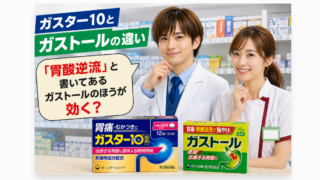
If you usually take Original Strength PEPCID AC in the US, one Japanese OTC medicine you can compare it with is GASTER10 (ガスター10).
Both products contain famotidine 10 mg per tablet.
However, there is an important difference in their labeled age restrictions.
🇺🇸 Original Strength PEPCID AC
🇯🇵 GASTER10

What’s in them?
| 🇺🇸 Original Strength PEPCID AC | 🇯🇵 GASTER10 | |
|---|---|---|
| Active ingredient | Famotidine | Famotidine |
| Amount per tablet | 10 mg | 10 mg |
| Maximum labeled amount | 20 mg/24 hours | 20 mg/day |
| Drug class | H2 blocker / acid reducer | H2 blocker |
| Labeled age | 12 years and over | 15 years and over, under 80 |
Both products contain famotidine 10 mg per tablet, and both labels allow a maximum of two tablets per day.
What is famotidine?
Famotidine is an H2-receptor blocker that reduces gastric acid secretion.
In the US, Original Strength PEPCID AC is labeled to relieve and prevent heartburn associated with acid indigestion and sour stomach.
In Japan, GASTER10 is approved for stomach pain, heaviness, heartburn, and nausea.
The important difference: age restrictions
Although the active ingredient and strength are the same, the age restrictions are different.
For Original Strength PEPCID AC in the US:
Adults and children 12 years and over: 1 tablet per dose, with no more than 2 tablets in 24 hours.
Children under 12 years: Ask a doctor.
For GASTER10 in Japan:
Adults aged 15 years and over and under 80 years: 1 tablet per dose, up to 2 times per day.
Children under 15 years: Do not take.
Adults aged 80 years and over: Do not take.
This means that someone who can use PEPCID AC according to the US label may still fall outside the approved age range for GASTER10 in Japan.
In particular, GASTER10 has an upper age limit of under 80 years, which is an important difference from the US PEPCID AC label.
Before you buy famotidine in Japan
Even though Original Strength PEPCID AC and GASTER10 contain the same active ingredient at the same strength, their approved uses, age restrictions, warnings, and directions are not interchangeable.
GASTER10 is also classified as a Class 1 OTC drug in Japan, so it is sold with pharmacist involvement.
Do not apply the US dosing or age instructions to the Japanese product.
Use this comparison as a reference and show the information to a pharmacist in Japan and ask whether the medicine is appropriate for you before purchasing.
Official sources
- US: Original Strength PEPCID AC — Official Product Information / Drug Facts
- Japan: GASTER10 — Official Product Information, Daiichi Sankyo Healthcare
Please also check the latest package information on the Amazon product pages linked above before purchasing or using any medicine.
IMODIUM A-D vs. Japanese Loperamide OTC Medicines
If you usually take IMODIUM A-D Caplets in the US, there are OTC anti-diarrheal medicines containing the same active ingredient in Japan.
Two examples are:
Tomedain Kowa Film (トメダインコーワフィルム)
Pishut Anti-Diarrheal OD Tablets (ピシャット下痢止めOD錠)
All three products contain loperamide hydrochloride as their only active ingredient.
However, there are major differences in both the labeled maximum daily amount and the minimum age for use.
🇺🇸 IMODIUM A-D Caplets
IMODIUM A-D contains 2 mg of loperamide hydrochloride per caplet.
🇯🇵 Tomedain Kowa Film

Tomedain Kowa Film contains 1 mg of loperamide hydrochloride in the adult daily dose of two films.
🇯🇵 Pishut Anti-Diarrheal OD Tablets

Pishut Anti-Diarrheal OD Tablets contain 1 mg of loperamide hydrochloride in the adult daily dose of two tablets.
What’s in them?
| 🇺🇸 IMODIUM A-D Caplets | 🇯🇵 Tomedain Kowa Film | 🇯🇵 Pishut OD Tablets | |
|---|---|---|---|
| Active ingredient | Loperamide HCl | Loperamide HCl | Loperamide HCl |
| Amount per unit | 2 mg/caplet | 0.5 mg/film | 0.5 mg/tablet |
| Maximum labeled adult daily amount | 8 mg/24 hours | 1 mg/day | 1 mg/day |
| Other active ingredients | None | None | None |
| Dosage form | Caplet | Dissolving film | Orally disintegrating tablet |
| Minimum age for labeled OTC use | 6 years* | 15 years | 15 years |
*For IMODIUM A-D Caplets, dosing for children ages 6–11 is based primarily on weight as well as age. Children ages 2–5 should only use it after asking a doctor, and children under 2 should not use it.
What is loperamide?
Loperamide is an anti-diarrheal medicine that acts on the intestine to slow intestinal movement and help reduce diarrhea.
Although all three products contain the same active ingredient, their labeled doses are very different.
For adults and children aged 12 years and over, the US IMODIUM A-D label allows up to four 2 mg caplets in 24 hours, or 8 mg of loperamide hydrochloride.
In contrast, both Japanese products contain a total of 1 mg of loperamide hydrochloride in the labeled adult daily dose.
The Japanese products should therefore be used according to their own Japanese directions rather than by applying the US IMODIUM dosing instructions.
The important difference: age restrictions
There is also a major difference in the minimum age for OTC use.
US IMODIUM A-D Caplets:
- Ages 12 and over: adult labeled directions
- Ages 9–11: pediatric dosing based on the label
- Ages 6–8: pediatric dosing based on the label
- Ages 2–5: ask a doctor
- Under 2: do not use
Tomedain Kowa Film and Pishut Anti-Diarrheal OD Tablets in Japan:
- Ages 15 and over: may be used according to the Japanese label
- Under 15: do not take
This means that a child who can use IMODIUM A-D Caplets according to the US label may still be too young to use these Japanese OTC loperamide products.
Before you buy loperamide in Japan
The US and Japanese products contain the same active ingredient, but their labeled daily amounts, age restrictions, directions, and approved uses are not interchangeable.
In particular:
US IMODIUM A-D: up to 8 mg/day for ages 12 and over
Japanese products: 1 mg/day for ages 15 and over
Do not use the US dosing instructions for a Japanese product.
Use this comparison as a reference and, especially when buying anti-diarrheal medicine for a child, show the information to a pharmacist or other qualified pharmacy staff in Japan and ask which medicine is appropriate before purchasing.
Official sources
- US: IMODIUM A-D Caplets — Official Product Information / Drug Facts
- Japan: Tomedain Kowa Film — Official Product Information, Kowa
- Japan: Pishut Anti-Diarrheal OD Tablets — Official Product Information, Taiko Pharmaceutical
Please also check the latest package information on the Amazon product pages linked above before purchasing or using any medicine.
Dramamine vs. Motion Sickness Medicines in Japan
Dramamine is a well-known motion sickness medicine brand in the US.
However, Dramamine products do not all contain the same active ingredient.
For example:
- Dramamine Original Formula: Dimenhydrinate
- Dramamine Less Drowsy: Meclizine hydrochloride
This distinction is important when looking for a motion sickness medicine in Japan.
🇺🇸 Dramamine Original Formula
Dramamine Original Formula contains dimenhydrinate 50 mg per tablet.
There is no simple one-to-one comparison with the Japanese OTC medicines listed below because they use different active ingredients.
🇺🇸 Dramamine Less Drowsy
Dramamine Less Drowsy contains meclizine hydrochloride 25 mg per tablet.
For adults and children aged 12 years and over, the US label states 1–2 tablets once daily.
🇯🇵 Travelmin 1

Travelmin 1 (トラベルミン1) contains two active ingredients per tablet:
- Meclizine hydrochloride 50 mg
- Scopolamine hydrobromide hydrate 0.25 mg
It is labeled in Japan for people aged 15 years and over, with one tablet taken once daily.
🇯🇵 Kunihiro Motion Sickness Medicine

Kunihiro Motion Sickness Medicine (乗りもの酔いの薬「クニヒロ」) contains meclizine hydrochloride 25 mg per tablet as its only active ingredient.
It is labeled for people aged 15 years and over. One tablet is taken per dose, up to twice daily if necessary, with at least four hours between doses.
What’s in them?
| 🇺🇸 Dramamine Original | 🇺🇸 Dramamine Less Drowsy | 🇯🇵 Travelmin 1 | 🇯🇵 Kunihiro | |
|---|---|---|---|---|
| Active ingredient | Dimenhydrinate | Meclizine HCl | Meclizine HCl + Scopolamine HBr hydrate | Meclizine HCl |
| Amount | 50 mg/tablet | 25 mg/tablet | 50 mg + 0.25 mg/tablet | 25 mg/tablet |
| Other active ingredients | None | None | Scopolamine HBr hydrate | None |
| Minimum labeled age | 2 years* | 12 years | 15 years | 15 years |
| Maximum labeled adult daily amount of meclizine | — | 50 mg/day | 50 mg/day | 50 mg/day |
Note on age: Dramamine Original Formula has different labeled doses for children ages 2–5, 6–11, and people aged 12 and over. Children under 2 should not use it unless directed by a doctor. Dramamine Less Drowsy is labeled for ages 12 and over.
The important difference: check which Dramamine you use
If you use Dramamine in the US, check the exact product name and active ingredient before comparing it with medicines sold in Japan.
Dramamine Original Formula contains dimenhydrinate, while the Japanese products shown here do not contain dimenhydrinate.
Dramamine Less Drowsy contains meclizine hydrochloride, which is also found in Travelmin 1 and Kunihiro Motion Sickness Medicine.
However, Travelmin 1 is a combination product containing meclizine and scopolamine, while Kunihiro is a meclizine-only product.
The labeled age restrictions and directions also differ between the US and Japan.
Need motion sickness medicine right away?
Travelmin 1 and Kunihiro Motion Sickness Medicine may not always be easy to find on drugstore shelves in Japan.
If you need motion sickness medicine right away, show this comparison to a pharmacist or other qualified pharmacy staff at a Japanese drugstore and ask which motion sickness medicine is appropriate for you.
Do not assume that a different Japanese motion sickness medicine can be used in the same way as Dramamine.
Official sources
- US: Dramamine Original Formula — Official Product Information / Drug Facts
- US: Dramamine Less Drowsy — Official Product Information / Drug Facts
- Japan: Travelmin 1 — Official Product Information, Eisai
- Japan: Kunihiro Motion Sickness Medicine — Official Product Information, Kokando Pharmaceutical
Please also check the latest package information on the Amazon product pages linked above before purchasing or using any medicine.
TUMS Extra Strength 750 vs. Ohta’s Isan Chewable NEO in Japan
If you usually take TUMS Extra Strength 750 in the US, one Japanese chewable antacid you can compare it with is Ohta’s Isan Chewable NEO (太田胃散チュアブルNEO).
Both are chewable antacid medicines, but their active ingredient formulations are quite different.
TUMS Extra Strength 750 contains calcium carbonate as its only active ingredient, while Ohta’s Isan Chewable NEO combines three different antacids plus an anti-foaming ingredient.
🇺🇸 TUMS Extra Strength 750
TUMS Extra Strength 750 contains 750 mg of calcium carbonate per tablet.
🇯🇵 Ohta’s Isan Chewable NEO

Ohta’s Isan Chewable NEO contains three antacid ingredients:
- Magnesium hydroxide
- Magnesium carbonate
- Precipitated calcium carbonate
It also contains dimethylpolysiloxane, an anti-foaming ingredient used to help relieve abdominal bloating caused by gas.
What’s in them? — Maximum labeled daily dose
| 🇺🇸 TUMS Extra Strength 750 | 🇯🇵 Ohta’s Isan Chewable NEO | |
|---|---|---|
| Calcium carbonate | 7,500 mg/day | 960 mg/day |
| Magnesium hydroxide | — | 600 mg/day |
| Magnesium carbonate | — | 600 mg/day |
| Dimethylpolysiloxane | — | 120 mg/day |
| Formulation | Calcium carbonate only | Three antacids + anti-foaming ingredient |
| Maximum labeled daily dose | 10 tablets/24 hours | 6 tablets/day |
| Minimum labeled age | 12 years | 15 years |
Note: This table compares the maximum labeled daily amounts for people within the labeled age range. It does not mean that the maximum dose should routinely be taken.
The amount of calcium carbonate also should not be used by itself to compare how “strong” the two products are, because Ohta’s Isan Chewable NEO contains multiple active ingredients.
What is different about the antacid ingredients?
This is one of the biggest differences between the two products.
TUMS Extra Strength 750 uses calcium carbonate as its single active antacid ingredient.
Ohta’s Isan Chewable NEO combines:
- Magnesium hydroxide: 600 mg/day
- Magnesium carbonate: 600 mg/day
- Precipitated calcium carbonate: 960 mg/day
According to official HP, the three antacids have different characteristics in how quickly and how long they act. Together, they neutralize excess stomach acid and help adjust acidity in the stomach.
The product also contains dimethylpolysiloxane 120 mg/day, which helps remove gas in the stomach and relieve abdominal bloating.
What about magnesium and calcium?
Magnesium- and calcium-based antacids have different characteristics.
Magnesium salts can have a laxative effect, while calcium carbonate can be associated with constipation.
However, these effects depend on the ingredient, dose, and individual.
The fact that Ohta’s Isan Chewable NEO contains both magnesium- and calcium-based antacids should not be interpreted as proof that they were combined specifically to “cancel out” diarrhea and constipation unless this is stated in official product information.
The important difference: age restrictions
The labeled minimum age is also different.
For TUMS Extra Strength 750:
Adults and children aged 12 years and over: Chew 2–4 tablets as symptoms occur.
Maximum: Do not take more than 10 tablets in 24 hours.
For Ohta’s Isan Chewable NEO:
Adults aged 15 years and over: 2 tablets per dose, 3 times daily, with at least 4 hours between doses.
Under 15 years: Do not take.
This means that someone aged 12–14 who can use TUMS Extra Strength 750 according to the US label is below the labeled age for Ohta’s Isan Chewable NEO in Japan.
Do not apply the US age or dosing instructions to the Japanese product.
Before you buy an antacid in Japan
TUMS Extra Strength 750 and Ohta’s Isan Chewable NEO are both chewable antacid medicines, but their active ingredients, labeled daily amounts, age restrictions, approved uses, and directions are different.
In particular:
US TUMS Extra Strength 750
Calcium carbonate only
750 mg per tablet
Maximum 7,500 mg/24 hours
Labeled for ages 12 and over
Japanese Ohta’s Isan Chewable NEO
Three antacids + dimethylpolysiloxane
Labeled adult daily dose: 6 tablets
Labeled for ages 15 and over
Do not assume that the number of tablets or dosing instructions are interchangeable.
If you need an antacid right away in Japan, show this comparison to a pharmacist or other qualified pharmacy staff at a Japanese drugstore and ask which stomach medicine is appropriate for your symptoms.
Official sources
- US: TUMS Extra Strength 750 — Official Product Information / Drug Facts
- Japan: Ohta’s Isan Chewable NEO — Official Product Information, Ohta’s Isan
Please also check the latest package information on the Amazon product pages linked above before purchasing or using any medicine.
Additional note: TUMS Extra Strength 750 has specific warnings regarding maximum use. Always follow the Drug Facts on the product you actually purchase.
More US Medicines Coming Soon
This guide will be updated with more comparisons of popular US medicines and OTC products available in Japan, including:
Aleve
and more.
Each comparison will focus on the actual active ingredients and strengths, rather than assuming that products with similar uses are the same.
If you are unsure which medicine to buy in Japan, use this guide as a reference and ask a pharmacist or qualified pharmacy staff at a Japanese pharmacy or drugstore before purchasing.
Product formulations, labeling, and availability may change. Always check the current package information before use.